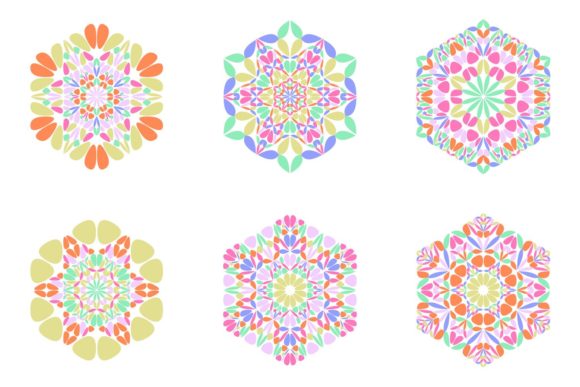
Floral Hexagon Designs for Creative Projects
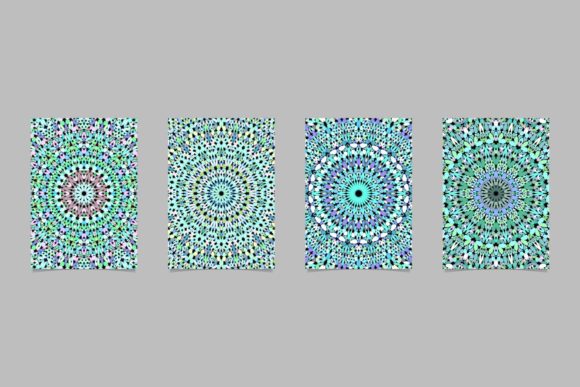
The intersection of organic beauty and mathematical precision defines the enduring appeal of floral hexagon designs. For creative professionals and business owners, this specific aesthetic offers more than just decoration; it provides a structured framework for visual communication that feels both natural and organized. When utilizing an isolated ornate floral ornament hexagon symbol set featuring geometric colorful vector elements with curved shapes, designers gain access to a versatile toolkit that bridges the gap between rigid geometry and fluid botanical art. The availability of these assets in high-resolution JPG (7500x5000) alongside editable vector EPS and AI formats ensures that the design process remains fluid across print, digital, and large-format applications without compromising quality or flexibility.
Bridging Organic Curves with Geometric Structure
One of the primary challenges in graphic design is balancing softness with structure. Purely geometric patterns can sometimes feel sterile or corporate, while purely floral illustrations may lack the hierarchy needed for functional design. Floral hexagon designs solve this tension by containing intricate, curved botanical elements within a stable six-sided boundary. This containment creates a modular unit that is inherently tileable and scalable. For a web designer creating a background texture, the hexagonal grid allows for seamless repetition that guides the eye without overwhelming the foreground content. Conversely, for a packaging designer, the same motif serves as a distinct window or label shape that stands out against standard rectangular shelving.
The inclusion of curved shapes within the geometric outline adds a layer of sophistication that prevents the design from appearing too industrial. These curves mimic natural growth patterns, making the hexagons feel alive rather than manufactured. When working with vector AI or EPS files, you have the unique ability to adjust these curves to match specific brand identities. A luxury skincare line might require elongated, elegant petals that suggest refinement, while a children’s educational brand might benefit from rounder, bolder curves that imply safety and playfulness. Having the source vector files means you are not locked into a single artistic interpretation; you can modify stroke weights, simplify details for small-scale use, or add complexity for hero images.
Maximizing Workflow Efficiency with Multi-Format Assets
Time management is often the most critical factor in freelance and agency work. Sourcing a set that includes both raster and vector formats eliminates the need for multiple searches or conversions. The 7500x5000 pixel JPG serves as an immediate solution for mockups, social media posts, or client presentations where editability is not yet required. This massive resolution ensures that even when cropped or zoomed, the image retains crisp edges and vibrant color fidelity. However, the true value lies in the accompanying EPS and AI files. These vectors allow for infinite scaling, which is non-negotiable for projects ranging from business cards to trade show banners.
- Rapid Prototyping: Use the high-res JPG to quickly visualize concepts during the brainstorming phase without waiting for heavy vector files to load.
- Print Production: Switch to EPS/AI formats for final output to ensure CMYK color accuracy and sharp lines at any physical dimension.
- Customization: Isolate individual floral ornaments within the vector file to create custom logos, bullet points, or section dividers.
- Color Adaptation: Recolor vector elements instantly to align with seasonal campaigns or specific client palettes without losing detail.
This dual-format approach supports a non-linear workflow. You might start a project using the raster version to get approval on the general vibe, then transition to the vector version for refinement. This reduces friction between ideation and execution, allowing creators to focus on strategy rather than asset generation.
Enhancing Visual Hierarchy and Brand Recognition
In marketing and publishing, consistency builds trust. Floral hexagon designs function exceptionally well as recurring visual anchors because their shape is distinct enough to be recognizable but neutral enough to hold varied content. Consider a blog or magazine layout where different categories need visual differentiation. Using a consistent hexagonal frame for category icons creates a cohesive system, while changing the internal floral ornament signals the specific topic. This subtle variation helps readers navigate content intuitively, reducing cognitive load and improving user experience.
For entrepreneurs and small business owners, these symbols can serve as a cost-effective alternative to custom illustration. An isolated ornate floral ornament set provides professional-grade artwork that can be adapted into a proprietary look. By combining specific hexagons with unique typography and color grading, a brand can establish a visual identity that feels bespoke. The key is intentional modification; simply dropping in a stock element looks generic, but integrating it thoughtfully into a broader design system creates ownership. The geometric nature of the hexagon also pairs well with modern sans-serif fonts, creating a contemporary contrast that keeps traditional floral motifs from feeling dated.
Practical Applications Across Industries
The versatility of geometric geometrical colorful vector elements extends far beyond surface pattern design. Educators can use these shapes to create engaging worksheets or certificates where the hexagon frames achievement badges or learning modules. The structured shape implies order and progress, while the floral aspect maintains an encouraging, approachable tone. In the wedding and event industry, these designs are staples for invitations, seating charts, and signage. The ability to scale vectors means the same floral hexagon used on a 5x7 invitation can be blown up for a 4-foot welcome sign without pixelation, ensuring brand consistency throughout the event environment.
Digital marketers also find value in these assets for social media templates. Instagram carousels and Pinterest pins benefit from the vertical-friendly proportions of stacked hexagons. Unlike circles, which waste corner space, or squares, which can feel static, hexagons tessellate efficiently and create dynamic negative space for text overlays. The colorful nature of the set allows for quick A/B testing of visual styles; a warmer palette might perform better for lifestyle content, while cooler tones might drive engagement for informational posts. Having a comprehensive set enables data-driven design decisions without additional production costs.
Considerations for Effective Implementation
While floral hexagon designs offer significant advantages, they are not a universal solution. It is important to assess whether this aesthetic aligns with your specific communication goals. Highly ornate florals may clash with minimalist tech brands or industries requiring stark, clinical precision. In such cases, the "ornate" aspect might need to be simplified via vector editing, or a different geometric motif might be more appropriate. Additionally, users should be mindful of licensing terms when incorporating these elements into trademarks or logos. While vector files allow for modification, legal ownership varies by provider, and due diligence is necessary to avoid future intellectual property issues.
Technical proficiency also plays a role in maximizing value. While the JPG is accessible to anyone, leveraging the full potential of EPS and AI files requires vector software like Adobe Illustrator or Affinity Designer. Users without these tools may find themselves limited to the raster version, missing out on recoloring and scaling benefits. For those new to vector editing, starting with simple opacity adjustments or color overlays on the JPG can be a good entry point before advancing to path manipulation. Ultimately, the goal is to treat these floral hexagon designs as foundational building blocks rather than finished products. When approached with strategic intent, they transform from mere decoration into powerful instruments for clarity, efficiency, and visual impact.