Black and White Floral: Evaluating Formats, Styles, and Practical Applications
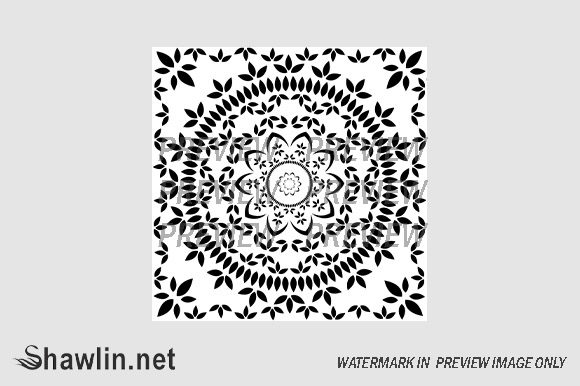
Black and white floral design occupies a unique space in visual communication, stripping away the emotional cues of color to focus entirely on form, texture, and composition. Unlike full-color botanical illustrations that rely on hue to differentiate species or create mood, monochrome florals depend on contrast and negative space. This distinction makes them exceptionally versatile for professional designers, event planners, and content creators who require assets that adapt seamlessly across various media. However, selecting the right black and white floral resource requires more than aesthetic appreciation; it demands a technical understanding of file formats and an awareness of when this stylistic choice outperforms colorful alternatives.
The Functional Advantage of Monochrome Botanicals
The primary strength of black and white floral imagery lies in its neutrality and adaptability. In branding and editorial design, color can sometimes clash with existing palettes or distract from typography. A high-contrast monochrome floral element acts as a structural component rather than a decorative afterthought. It provides organic softness to rigid layouts without introducing visual noise. For example, a law firm or financial consultancy might find vibrant tropical prints too casual, yet a stark, engraved-style white rose conveys sophistication and tradition without compromising professional gravity.
Furthermore, black and white florals are inherently accessible. They maintain their integrity when printed on newsprint, photocopied, or viewed on e-ink devices where color fidelity is poor. This makes them a superior choice for documents that must remain legible and aesthetically pleasing regardless of the output medium. When comparing resources, evaluate whether the artwork relies solely on color gradients to define shape. True monochrome florals should be recognizable and impactful even if reduced to pure bitmap data, ensuring longevity across changing design trends and reproduction technologies.
Evaluating Vector EPS Files for Scalability
When sourcing black and white floral assets, the Encapsulated PostScript (EPS) format remains the industry standard for professional print and large-format applications. EPS files contain vector data, meaning the floral designs are defined by mathematical paths rather than pixels. This is critical for florals because organic curves and intricate petal details often suffer from aliasing or blurring when rasterized at incorrect resolutions.
Best-fit situations for EPS:
- Large-scale signage, wedding backdrops, or textile printing where resolution independence is mandatory.
- Projects requiring color modification, such as changing a black line drawing to a specific brand Pantone.
- Integrating florals into complex illustrations where individual elements need to be isolated or rearranged.
The tradeoff with EPS is accessibility. These files generally require specialized software like Adobe Illustrator or Affinity Designer to view and edit. They are not web-ready and cannot be placed directly into most word processors or basic layout tools. If your workflow does not include vector editing capabilities, an EPS file may become a digital paperweight. Additionally, older EPS files may contain legacy preview images that appear low-resolution on screen despite the underlying vector data being crisp, which can cause confusion during the selection process.
Raster Alternatives: PNG vs. JPEG
For digital-first projects or users without vector software, raster formats offer immediate usability, though with distinct limitations. Understanding the difference between PNG and JPEG is essential when working with black and white florals, as the absence of color exacerbates compression artifacts.
PNG (Portable Network Graphics) is typically the superior raster choice for monochrome florals. PNG supports lossless compression and transparency. The transparency channel is particularly valuable for floral overlays, allowing you to place a stem or bloom over colored backgrounds or text without a distracting white box. Because PNG is lossless, the sharp edges characteristic of black and white line art remain clean. This format is ideal for web headers, social media graphics, and digital invitations where crispness matters more than file size.
JPEG (Joint Photographic Experts Group) uses lossy compression designed for continuous-tone photographs. For black and white florals, especially those with high contrast or fine lines, JPEG compression can introduce "ringing" artifacts or muddy gray halos around black edges. While JPEGs offer smaller file sizes, they are generally ill-suited for graphic floral elements unless the image is a photograph of a real flower with soft, natural gradients. If you must use JPEG, ensure it is saved at maximum quality settings to minimize degradation of the linework.
Leveraging Help Files and Documentation
A frequently overlooked component of digital asset packages is the help file or documentation. When evaluating black and white floral collections, the presence of comprehensive support material often indicates higher overall quality and usability. These files serve as a bridge between the raw asset and successful implementation.
Quality help files should address several practical concerns:
- Licensing Clarity: Explicitly stating whether the floral designs can be used for commercial merchandise, client work, or only personal projects. Ambiguity here is a significant risk factor.
- Technical Specifications: Listing the exact dimensions, DPI, and color profiles (e.g., CMYK vs. RGB) of included files. This prevents the frustration of discovering a file is unsuitable for print after purchase.
- Editing Instructions: Providing guidance on how to separate layers, modify stroke weights, or convert between formats. For complex floral compositions, knowing which elements are grouped or locked saves hours of reverse engineering.
- Font Dependencies: If the floral package includes typographic elements or monograms, the help file should identify required fonts and provide links to legitimate sources.
If a resource lacks documentation, proceed with caution. The absence of a help file often correlates with poorly organized layers, missing metadata, or unclear usage rights. In professional environments, time spent troubleshooting an undocumented asset frequently outweighs the cost savings of a cheaper, less supported alternative.
Comparing Stylistic Approaches and Alternatives
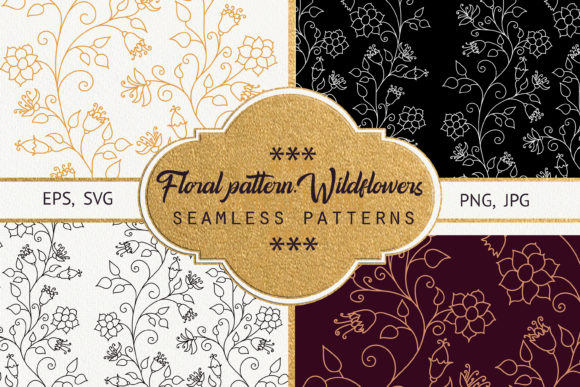
Not all black and white florals serve the same purpose. Distinguishing between stylistic categories helps prevent mismatched expectations. Line art focuses on outline and minimalism, making it perfect for modern branding and subtle watermarks. Woodcut or engraving styles utilize hatching and cross-hatching to create volume, lending a vintage or academic feel suitable for book covers and formal stationery. Silhouette florals rely entirely on solid shapes and negative space, offering bold graphic impact but limited detail.
When comparing black and white florals against other options, consider the following decision factors:
- Versus Full Color: Choose monochrome when flexibility and reproducibility outweigh the need for botanical accuracy or emotional warmth. Color is preferable when the specific species identification matters or when the design must evoke a seasonal atmosphere.
- Versus Abstract Patterns: Black and white florals retain a connection to nature that geometric patterns lack. If the goal is to humanize a technical or corporate layout, florals provide organic balance that abstract shapes cannot replicate.
- Versus AI-Generated Imagery: While AI tools can produce monochrome florals rapidly, they often struggle with botanical accuracy and consistent line weight. Hand-drawn or professionally curated vectors offer reliability and editability that current generative models frequently lack. AI may suffice for mood boarding or background textures, but curated assets remain safer for production work.
Making the Final Selection
The decision to utilize black and white floral resources should be driven by project requirements rather than trend alone. Begin by defining the technical constraints: Will this be printed at large scale? Does it need to overlay varying background colors? Is long-term editability necessary? Answering these questions determines whether you need an EPS vector, a transparent PNG, or a documented bundle.
Next, assess the stylistic alignment. A delicate, sparsely drawn peony communicates something fundamentally different from a dense, Art Nouveau-inspired lily. Ensure the chosen style reinforces rather than contradicts the intended message. Finally, verify the support infrastructure. Resources that include clear help files, proper licensing, and multiple format options demonstrate a commitment to user success that standalone image files rarely provide.
By approaching black and white floral selection through this analytical lens, you move beyond subjective preference toward informed resource management. The result is not just a visually appealing design, but a functional asset that performs reliably across contexts, scales, and applications. Whether you are designing a wedding suite, a corporate annual report, or a digital publication, understanding the interplay between format, style, and documentation ensures your monochrome florals serve as effective tools rather than mere decoration.