Seamless Paisley Floral Patterns: A Guide to Retro Digital Design
In the evolving landscape of digital design, few aesthetics capture the imagination quite like the intersection of vintage nostalgia and modern vibrancy. Seamless paisley floral patterns represent a unique category within this space, bridging the gap between traditional textile art and contemporary digital utility. Specifically, collections that merge 1960s-inspired motifs with neon color palettes on dark backgrounds offer designers a versatile toolkit for creating striking visual content. Understanding how to leverage these assets effectively requires more than just downloading files; it demands an appreciation of their historical context, technical specifications, and practical applications across various media.
The Fusion of Mod Aesthetics and Modern Utility
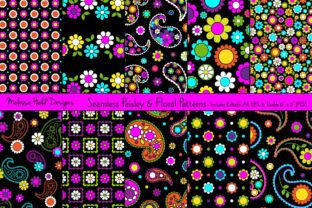
When exploring seamless paisley floral patterns, one must first understand the stylistic lineage they represent. The specific collection by Melissa Held Designs exemplifies a "mod" revival, characterized by intricate geometric arrangements and bold, psychedelic influences reminiscent of the late 1960s. However, unlike authentic vintage textiles which may suffer from fading or damage, these digital interpretations provide pristine clarity. The use of neon colors against black backgrounds is not merely an aesthetic choice; it serves a functional purpose in digital design. High-contrast patterns are inherently more legible on screens and create dramatic focal points in print materials, making them superior for projects requiring immediate visual impact.
This particular set includes ten distinct designs, each measuring 12” x 12”. This dimension is significant because it aligns perfectly with standard scrapbooking paper sizes and common web texture dimensions. For creators, this means less time spent resizing and cropping, and more time focused on composition. The seamless nature of these seamless paisley floral patterns ensures that when tiled horizontally or vertically, no visible seams interrupt the flow of the design. This continuity is essential for professional-grade backgrounds where repetition artifacts can ruin the user experience or print quality.
Technical Versatility Across File Formats
A critical consideration for professionals evaluating any digital asset library is format flexibility. This collection addresses diverse workflow needs by providing three distinct file types for every pattern:
- JPG Files: These are raster images optimized for immediate use. Being conveniently tileable at 12x12 inches, they are ideal for web backgrounds, social media graphics, and quick mockups where editing vector points is unnecessary.
- EPS Files: Encapsulated PostScript files serve as the industry standard for vector exchange. They allow for infinite scaling without loss of quality, making them suitable for large-format printing like banners or packaging.
- AI Files: Adobe Illustrator source files offer the highest level of editability. Each file includes layers for both the expanded pattern and individual swatches, allowing designers to isolate specific elements, recolor motifs, or rearrange components to create derivative works.
The inclusion of separate swatch layers is a particularly valuable feature often overlooked in generic pattern packs. It allows users to extract individual floral or geometric elements to use as standalone icons, borders, or accents, significantly extending the value proposition beyond simple background tiling.
Practical Applications in Digital and Print Media
The true test of seamless paisley floral patterns lies in their application. While aesthetically pleasing, their worth is determined by how well they solve real-world design problems. Below are several scenarios where this specific mod-neon aesthetic excels.
Web Design and User Interface Backgrounds
In web design, dark mode interfaces have gained immense popularity due to reduced eye strain and battery savings on OLED screens. Neon-on-black seamless paisley floral patterns integrate naturally into these environments. Unlike light patterns that require heavy opacity reduction to avoid competing with foreground text, high-contrast dark patterns can often be used at full strength while maintaining excellent readability for white or light-colored typography. Designers can utilize the JPG versions as CSS background images, leveraging the 12x12 tiling capability to create lightweight, repeating textures that load quickly even on mobile connections.
Scrapbooking and Physical Crafting
For the crafting community, the 12” x 12” specification is non-negotiable. This collection caters directly to scrapbookers who need archival-quality digital papers. The intricate details of the paisley and geometric shapes provide rich visual interest that flat colors cannot achieve. Because the files include editable AI and EPS formats, advanced crafters can modify colors to match specific photo themes or event palettes. For example, a designer could shift the neon pinks and greens to muted golds and creams for a wedding album, or to primary colors for a child’s birthday project, all while retaining the complex structural integrity of the original mod design.
Gift Wrap and Packaging Design
Packaging design relies heavily on pattern repetition to create brand recognition. The seamless quality of these assets ensures that gift wrap printed on rolls maintains consistent alignment. The bold, retro-futuristic vibe of neon paisley appeals to niche markets seeking alternatives to traditional holiday or floral wraps. Business owners can use the vector files to adjust pattern density, spacing out elements for a minimalist luxury look or tightening the grid for a maximalist pop-art effect. This adaptability makes the collection a cost-effective alternative to commissioning custom surface pattern design from scratch.
Evaluating Suitability and Considerations
While seamless paisley floral patterns with neon mod styling are powerful tools, they are not universally appropriate. Understanding their limitations is as important as recognizing their strengths.
Visual Weight and Hierarchy
These patterns possess significant visual weight. The combination of intricate linework and high-saturation neon colors creates a busy texture. In design projects where subtle elegance or minimalism is the goal, these patterns may overwhelm the content. They work best as supporting elements in maximalist designs or as primary focal points in projects intended to evoke energy, nostalgia, or counter-culture vibes. Users should always test contrast ratios when placing text over these patterns to ensure accessibility compliance, particularly for web applications.
Color Management Challenges
Neon colors present unique challenges in print production. RGB neon values displayed on screen often fall outside the CMYK gamut printable on standard offset or digital presses. Professionals using the EPS or AI files for physical products must anticipate color shifts during conversion. The provided swatches can be helpful here, allowing designers to preview how individual colors interact before committing to a full layout. For home crafters using inkjet printers, results will vary based on printer capabilities and paper type; glossy papers typically reproduce neon tones more accurately than matte finishes.
Stylistic Cohesion
The 1960s mod aesthetic is distinctive. When incorporating these seamless paisley floral patterns into existing brand identities, consider whether the retro-futurism aligns with current messaging. While vintage trends cycle regularly, mixing conflicting eras (e.g., Victorian ornamentation with mod neon) can create visual dissonance unless executed with deliberate eclecticism. The geometric precision of these patterns pairs exceptionally well with mid-century modern typography, sans-serif fonts, and clean architectural photography, but may clash with organic, hand-drawn illustrations or rustic textures.
Maximizing Value Through Customization
To truly benefit from this collection, users should move beyond using the patterns as static backgrounds. The layered structure of the AI files invites creative experimentation. Consider these advanced techniques:
- Color Grading: Apply gradient maps or hue/saturation adjustments to transform the neon palette into seasonal variations or brand-specific colorways.
- Scale Manipulation: Use the vector files to dramatically enlarge specific motif sections, creating abstract textures that retain the essence of the paisley without literal representation.
- Mixed Media Integration: Combine the digital patterns with photographic overlays, grain textures, or lighting effects to add depth and reduce the flatness sometimes associated with pure vector art.
- Selective Masking: Use the pattern as a mask rather than a fill, revealing underlying imagery through the intricate paisley shapes for sophisticated editorial layouts.
Ultimately, seamless paisley floral patterns from this collection serve as both ready-to-use assets and foundational building blocks for original creation. Their value extends far beyond the initial download, offering sustained utility through technical flexibility and timeless yet trendy aesthetic appeal. Whether you are a web developer seeking engaging dark-mode textures, a scrapbooker preserving memories with vibrant flair, or a packaging designer targeting retro-conscious consumers, understanding the nuances of these patterns enables more informed, effective, and creative design decisions. By respecting both the historical inspiration and the technical requirements of modern media, creators can harness the full potential of mod seamless design in ways that resonate authentically with contemporary audiences.